
If your dentist has mentioned an early cavity or pointed out a chalky white spot on one of your teeth, your next thought is probably about the drill. In a meaningful number of cases, that step is not necessary yet.
Enamel that has started to weaken but has not yet broken down can still be rebuilt. Curodont remineralization therapy is built around exactly that window, and it works without drilling, injections, or the removal of healthy tooth structure.
At Crystal Dental, our approach to natural tooth healing begins with finding decay early enough that conservative treatment is still an option. Here is how Curodont actually works, who it helps, and just as importantly, when a filling is still the better choice.
What Happens Inside a Tooth Before a Cavity Forms
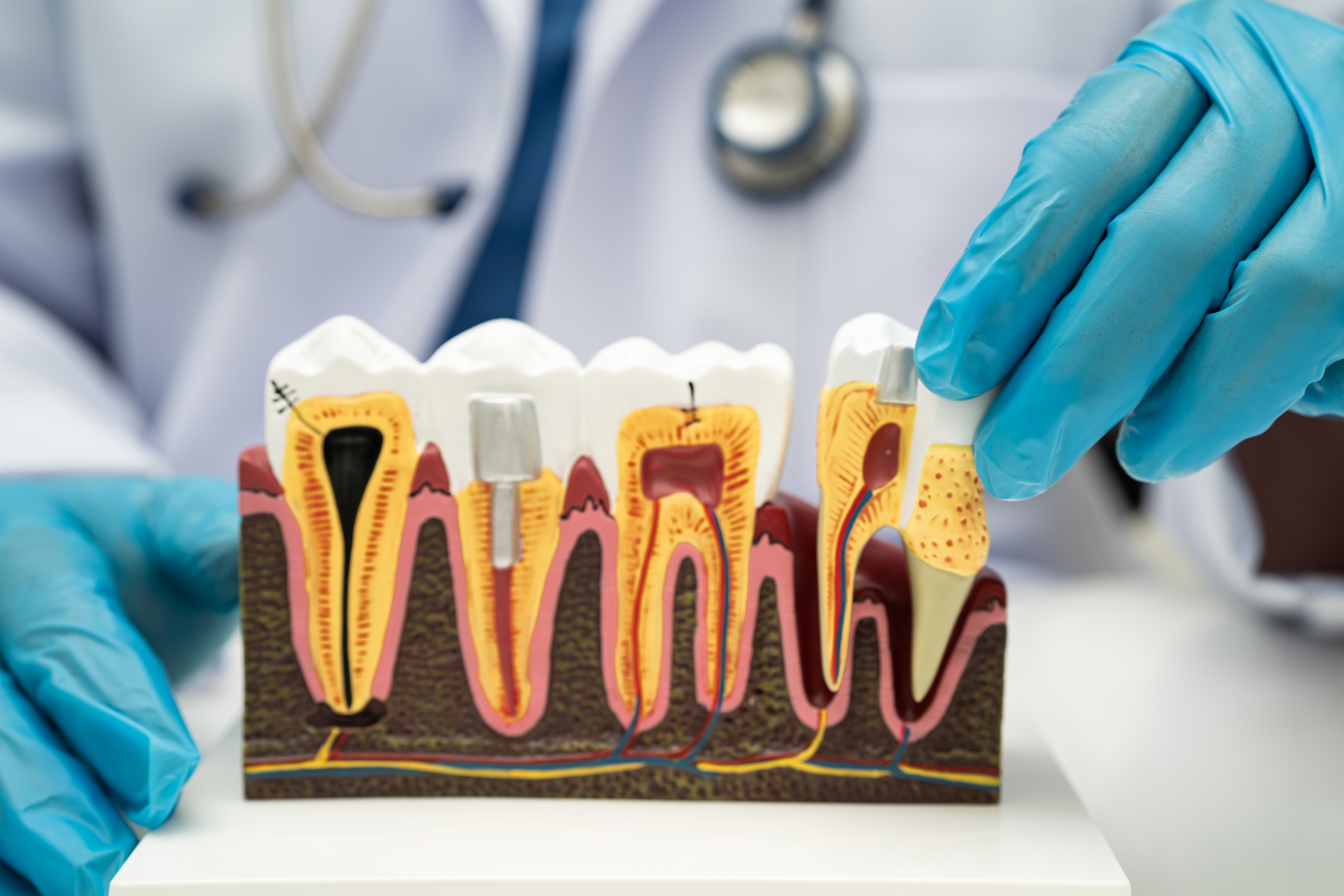
A cavity is the end of a process, not the start of one. It begins when bacteria in the mouth feed on sugars and release acid, and that acid pulls calcium and phosphate out of the enamel. Dentists call this mineral loss demineralization.
In the earliest stage, the outer surface of the enamel stays intact while microscopic pores open up underneath it. Nothing hurts, nothing looks obviously damaged, and the only visible clue may be a dull white patch that patients often mistake for a stain.
That intact surface is what makes conservative treatment possible. As long as the enamel has not collapsed, minerals can still travel back into the weakened zone. Once the surface caves in and a true hole forms, the tooth cannot rebuild what is missing on its own, and restorative treatment becomes necessary.
What Is Curodont and How Does It Rebuild Weakened Enamel?
Curodont is a remineralization therapy applied directly to an early enamel lesion instead of drilling it away. The solution is formulated to soak into the porous enamel beneath the surface rather than sit on top of the tooth the way a varnish does.
Once inside the lesion, the material organizes itself into a fine internal scaffold that fills the microscopic spaces left behind by mineral loss. That scaffold gives calcium and phosphate from your saliva a structure to attach to, which is how the weakened area regains density from the inside out.
This is a fundamentally different mechanism from a filling. A filling replaces lost tooth structure with a synthetic material. Curodont works with tooth structure that is still present, supporting natural repair rather than substituting for it. That distinction is why accurate diagnosis matters so much, because the treatment needs enough intact enamel to work with.
What Happens During a Curodont Appointment?
Curodont is typically completed in a single visit. The dentist cleans and conditions the surface of the tooth so the solution can reach the lesion, applies it, and allows it to absorb. There is no drilling and no injection, so anesthesia is generally not needed.
Patients who dread dental work often describe it as the easiest appointment they have had. That matters practically and not just emotionally, because fear of the drill is one of the most common reasons people postpone care until a small problem becomes an expensive one.
The application is quick, but the strengthening is gradual. Enamel continues to take up minerals over the following weeks, so your dentist will re-examine the treated area at future visits to confirm the lesion is stabilizing rather than progressing.
Who Qualifies for Curodont Treatment?
Curodont is intended for early, noncavitated lesions. The strongest candidates have white spot lesions or areas of demineralization where the enamel surface is still whole. If your dentist has told you there is a small spot being watched, you may be precisely the patient this treatment was designed for.
White spots that show up after braces come off are a particularly good fit, since they usually reflect demineralization from plaque sitting against the enamel rather than true structural loss. Patients finishing orthodontic treatment, including Invisalign, are worth evaluating for this reason.
Elevated cavity risk also makes early evaluation worthwhile. Frequent past cavities, dry mouth, grazing or sipping throughout the day, and inconsistent home care all speed up demineralization. Age is not the deciding factor. Children, teenagers, and adults can all qualify, because what matters is the depth and activity of the lesion rather than who it belongs to.
When Is a Filling Still the Right Choice?
Curodont cannot rebuild structure that is already gone. If the enamel surface has broken through, or if decay has reached the dentin underneath, a filling is the appropriate treatment and postponing it puts the tooth at greater risk.
Dentin decay tends to spread faster than enamel decay because dentin is softer and more porous. Left alone, it can reach the nerve and turn a straightforward filling into a root canal.
Signs that decay has progressed include lingering sensitivity, pain when biting, food packing into one specific spot, or a visible hole. Plenty of advanced cavities cause no symptoms at all, which is exactly why this decision belongs to an exam and X-rays rather than to how the tooth feels.
Being told you need a filling is not a failure of prevention. The goal is always the most conservative treatment that will predictably work, and sometimes that treatment is a filling.
How Is Curodont Different From a Fluoride Treatment?
Patients often ask why they would need Curodont when fluoride varnish is already part of a routine cleaning. Both support remineralization, but they work at different depths.
Fluoride primarily strengthens the outer surface of the enamel and helps it resist future acid attacks. It is excellent prevention and it stays in the plan. Its limitation is that it tends to harden the surface layer, which can seal over porous damage still sitting underneath.
Curodont is designed to reach that deeper zone and rebuild it from within. In practice the two are complementary rather than competing. Many patients receive Curodont for one specific lesion and continue fluoride as ongoing protection for the rest of the mouth.
What Curodont Cannot Do for You
Curodont treats a lesion. It does not treat the reason the lesion formed. If the diet, hygiene, or saliva conditions that caused the mineral loss stay the same, new weak spots will simply appear somewhere else.
It also does not make a tooth permanently decay-proof. Brushing twice daily with fluoride toothpaste, cleaning between the teeth, and reducing how often you expose your teeth to sugar and acid still do most of the work. Frequency matters more than quantity here, since sipping a soda over two hours is harder on enamel than finishing it in five minutes.
Dry mouth deserves specific attention. Saliva supplies the calcium and phosphate that remineralization depends on, so patients taking medications that reduce saliva flow may need additional support. Regular exams and professional cleanings through preventive dentistry remain essential, because Curodont only helps if someone catches the lesion while it is still treatable.
Frequently Asked Questions About Curodont
Does dental insurance cover Curodont treatment?
Most dental plans do not yet include a dedicated benefit for Curodont, so it is commonly an out-of-pocket expense. It is typically far less costly than the restorative work it may help you avoid, and Crystal Dental offers flexible payment options. Our team can review your specific plan before you commit to treatment.
How many Curodont treatments will I need?
Many early lesions are addressed with a single application. Larger or more active areas sometimes call for a second treatment, and that decision is made by evaluating how the lesion responds at your follow-up exam rather than on a fixed schedule.
Will Curodont make the white spot on my tooth disappear?
White spots frequently become less noticeable as the enamel regains mineral, but Curodont is a health treatment rather than a cosmetic one and complete disappearance is not guaranteed. If appearance is your primary concern, ask about cosmetic options once the tooth has stabilized.
Is Curodont safe for children?
Yes. Because there is no drilling, no anesthesia, and no removal of tooth structure, children often tolerate it far better than a traditional filling. Candidacy still depends on the stage of the lesion rather than the age of the patient.
Can a tooth treated with Curodont still get a cavity later?
Yes. Curodont strengthens one specific weakened area, it does not make the tooth immune. Consistent home care, attention to diet, and regular checkups are what prevent new decay from developing.
Find Out Whether Curodont Is an Option for Your Teeth
A white spot or an early cavity does not automatically mean a filling. When decay is caught while the enamel surface is still intact, Curodont offers a way to strengthen the tooth and keep it whole.
At Crystal Dental, we evaluate the lesion, your cavity risk, and your overall oral health before recommending anything. We are not trying to avoid fillings when a filling is genuinely needed. We are trying to identify the cases where one is not needed yet.
We treat patients from across Los Angeles, including Downtown, Koreatown, Mid-Wilshire, and the neighborhoods surrounding USC. Schedule an exam at our Figueroa Street office in 90007 or our 5th Street office in Downtown Los Angeles 90071 to find out whether natural tooth healing is a realistic option for your smile.