
Many adults think about straightening their teeth for years before booking a consultation. Some assume they have missed the window for orthodontic treatment. Others worry that a demanding job, a full family schedule, or an active social life makes it the wrong moment to start.
There is no age limit for straightening your teeth. What actually determines the right time to begin Invisalign is the health of your teeth and gums, the complexity of your case, and your readiness to wear the aligners consistently. Understanding those factors puts the decision in your hands rather than leaving it to guesswork.
Why Age Matters Less Than the Condition of Your Teeth
The best time to begin Invisalign is rarely tied to a birthday. Adults in their twenties, forties, and sixties all complete treatment successfully every year. What matters is whether the foundation is sound.
Healthy gums and stable teeth give the aligners something reliable to work with. If the supporting structures are healthy, tooth movement is predictable regardless of your age. When people say someone is too old for Invisalign, what they are usually describing is untreated gum disease or bone loss, and those are health issues rather than age issues. Many older adults are excellent candidates precisely because they take consistent care of their oral health.
Why Waiting Often Makes Treatment More Complicated
It is easy to delay orthodontic treatment when nothing hurts. Slight crowding or a small gap feels cosmetic, like something you can deal with eventually. The difficulty is that teeth do not hold still through adulthood.
Everyday chewing forces, natural aging, past tooth loss, gum disease, and nighttime grinding all nudge teeth out of position over time. Minor crowding can slowly deepen, and your bite can shift in ways that concentrate pressure on a few teeth. That uneven load speeds up enamel wear and can lead to small chips or fractures.
Waiting can also narrow your options. A case that Invisalign could correct straightforwardly today may, years later, need longer treatment or additional steps. Beginning before the changes compound usually means a simpler and more predictable path. This is the same conservative, prevention-first thinking that guides every treatment decision at Crystal Dental: address a concern while it is small rather than after it has grown.
Why Your Oral Health Is Evaluated Before Treatment Begins
Being a good Invisalign candidate starts with a healthy mouth, so treatment is planned only after a thorough examination. That evaluation is not a hurdle. It is what keeps your results stable for the long term.
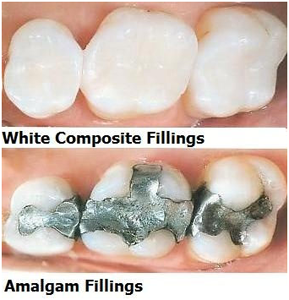
Active cavities are generally restored first, because moving a tooth with decay in it can complicate treatment and let the problem worsen out of view. Patients with gum disease usually benefit from stabilizing their gum health before starting, since healthy gums provide the support that safe tooth movement depends on. Your dentist also checks existing crowns, fillings, bridges, and implants, because these restorations do not shift the way natural enamel does and the plan has to account for them.
Handling these details up front is what allows an Invisalign plan to be genuinely personalized rather than one-size-fits-all, and it is the single biggest factor in avoiding surprises later.
What Invisalign Treatment Actually Requires From You
The most important factor in a successful outcome has nothing to do with age. It is consistent. Because the aligners are removable, the responsibility for wearing them sits with you rather than being fixed in place like traditional braces.
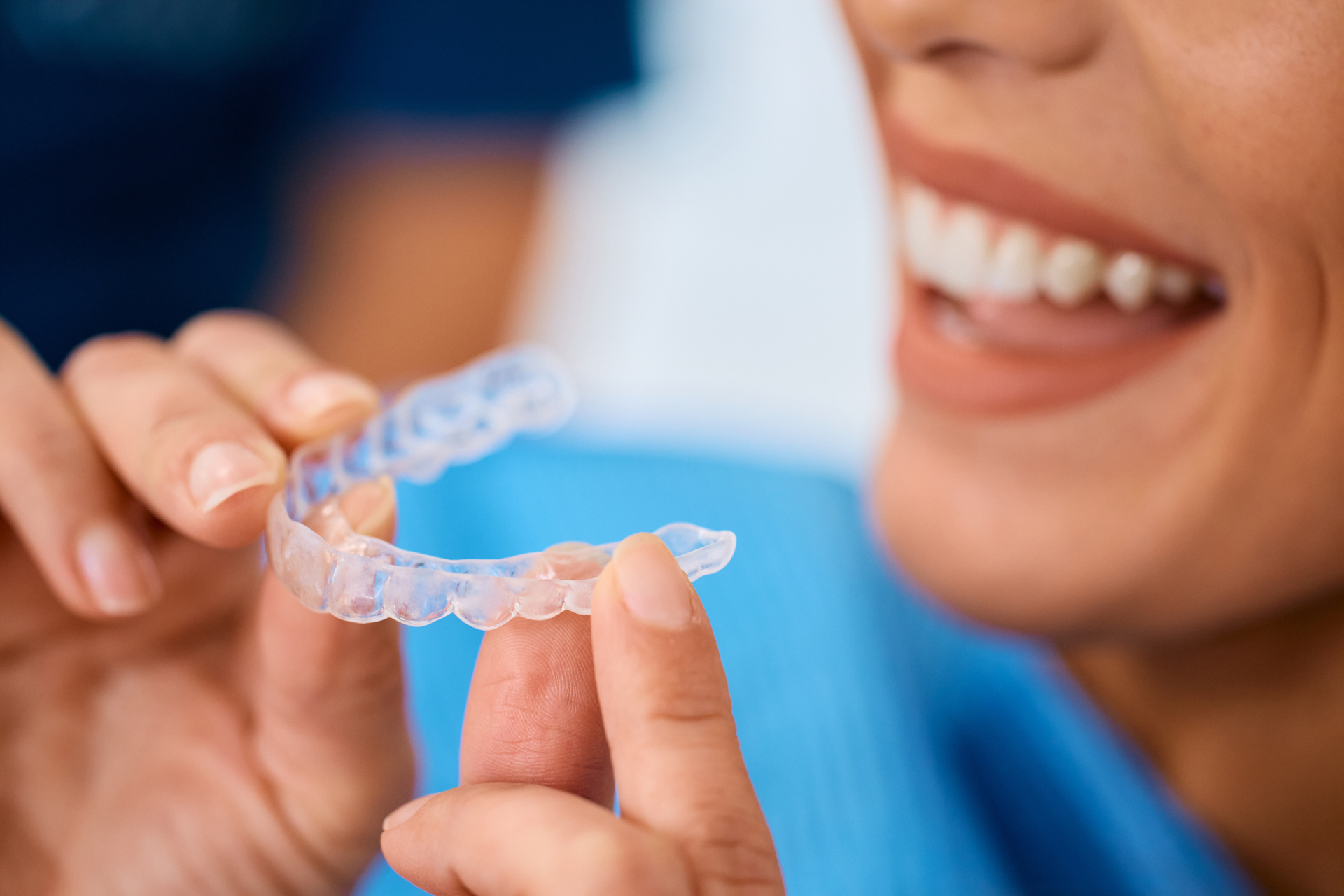
Aligners need to be worn about 20 to 22 hours a day, coming out only to eat, to drink anything other than water, and to brush and floss. Leaving them out for long stretches slows tooth movement and stretches out the timeline. This is the trade-off for the flexibility: braces work whether you cooperate or not, while Invisalign rewards discipline.
Adults tend to do well here. They understand why consistency matters and are motivated by a result they chose for themselves, which is why adult cases are often smooth and predictable. The removable design also makes daily life easier. You eat normally with the aligners out and brushing and flossing stay simple because there are no brackets or wires to clean around, which supports healthier gums throughout treatment.
Understanding the Cost of Invisalign and How to Plan for It
Cost is one of the most common reasons adults hesitate, so it deserves a clear answer. Invisalign is an investment, and for many people it is comparable to traditional braces. Straighter teeth are also easier to clean, which can lower the risk of cavities and gum disease over time and reduce future dental costs.
Many dental insurance plans include an orthodontic benefit that applies to Invisalign, though the amount varies from plan to plan. If yours does not, that does not put treatment out of reach. At Crystal Dental, we offer flexible payment and financing options, including interest-free plans, so the cost can be spread out rather than paid all at once. Our team can review your specific coverage during your consultation and give you a clear picture before you commit to anything.
Common Misconceptions About Adult Invisalign
A few persistent myths keep adults from treatment that would genuinely help them, so they are worth clearing up directly.
The first is that Invisalign is only cosmetic. Straightening does improve appearance, but alignment also affects how evenly your teeth wear, how well you can clean between them, and how your bite distributes force. These are functional, long-term health benefits, not just aesthetic ones.
The second is that Invisalign only works for very minor cases. Clear aligner technology has advanced considerably and now treats crowding, spacing, and many bite issues that once required braces. A consultation is the only reliable way to know whether your case qualifies.
The third involves attachments and refinements. Many patients receive small tooth-colored attachments that help the aligners grip certain teeth, and some need a short round of refinement aligners near the end to fine-tune the result. Neither means anything went wrong. Both are normal, planned parts of achieving a precise finish.
Frequently Asked Questions
Is it ever too late to start Invisalign as an adult?
No. There is no upper age limit. As long as your teeth and gums are healthy enough to support movement, Invisalign can work well for adults at any stage of life.
Can I get Invisalign if I had braces as a teenager?
Yes, and many adults do. Teeth often drift back toward their original position in the years after braces, a change called orthodontic relapse. Invisalign is frequently used to correct that shift and restore a straighter smile.
Does dental insurance cover Invisalign?
Many plans include an orthodontic benefit that applies to Invisalign, but the amount varies widely. We can check your specific coverage during your consultation, and financing is available if your plan does not include orthodontics.
Can I eat and drink normally during treatment?
Yes. You remove the aligners to eat, so there are no food restrictions. The main habit to build is taking them out for anything other than water, since drinks like coffee can stain the aligners and trap sugar against your teeth.
How long does adult Invisalign treatment usually take?
It depends on the complexity of your case. Many adult cases finish within 12 to 18 months, and milder cases can take less. Your dentist can give you a personalized estimate after evaluating your teeth.
Find Out Whether Now Is the Right Time for Your Smile
There is rarely a flawless moment to straighten your teeth, but there is real value in addressing alignment before it becomes more complex. Whether your goal is confidence, easier cleaning, or protecting your long-term oral health, starting sooner often means a simpler and more predictable experience.
At Crystal Dental, we evaluate your oral health, discuss your goals honestly, and build an Invisalign plan around your specific situation rather than a template. We serve patients across Los Angeles, including Downtown, Koreatown, and Mid-Wilshire. Schedule a consultation at our Figueroa Street office in 90007 or our 5th Street office in Downtown Los Angeles and find out whether now is the right time to begin.